International Vincentian Business Ethics Conference, 23 October 2025
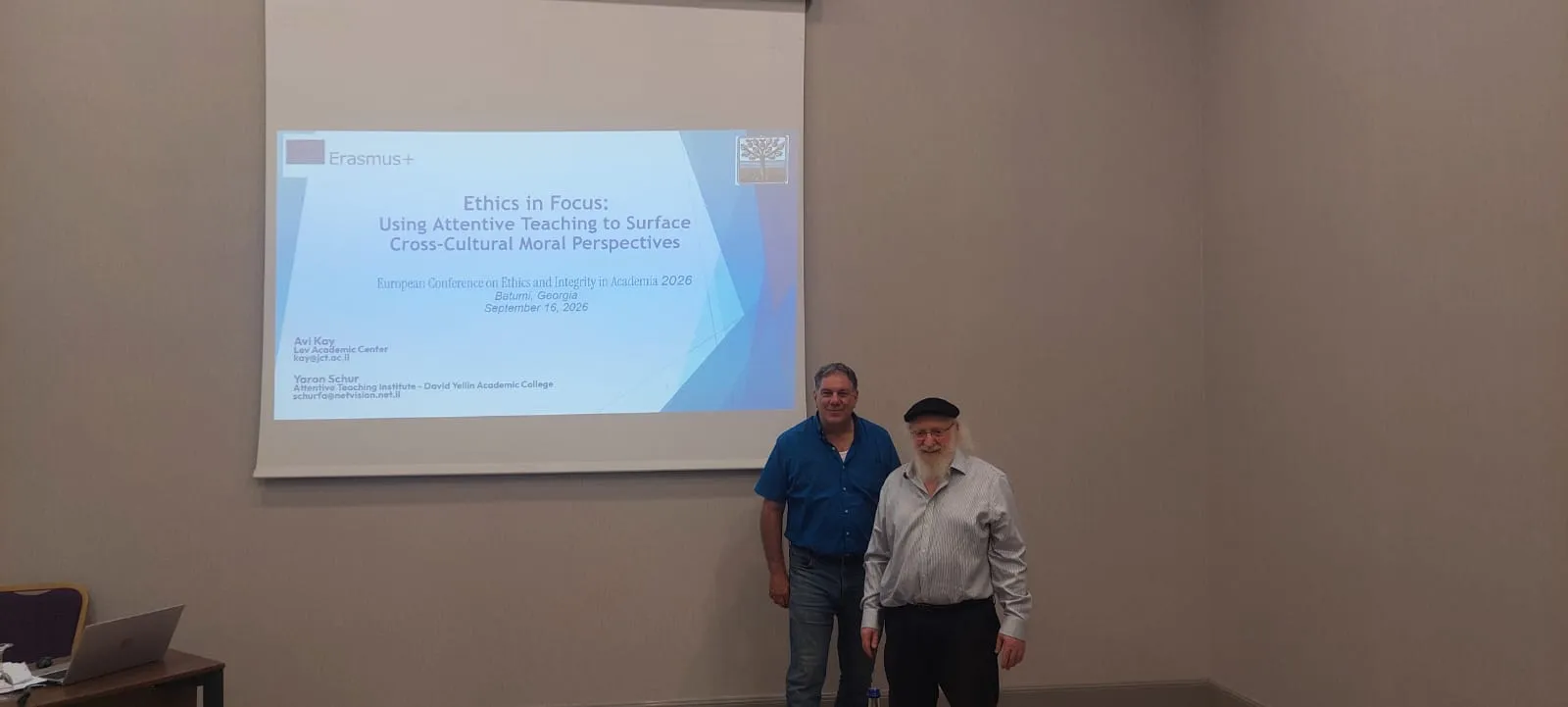
In October 2025 the project presented its approach and its first findings at the International Vincentian Business Ethics Conference, in a session led by Avi Kay of the Lev Academic Center.
The premise
The project starts from a straightforward proposition: to unlock the full potential of education in Business Ethics, Corporate Social Responsibility and Sustainable Development, three things have to be understood better than they currently are.
The first is how these subjects are actually conceived and taught today. The second is the underlying assumptions and attitudes held by both students and faculty, which the project examines through a multi-method analysis of attitudes and preferences. The third is moral diversity itself, which the project treats as something to understand and embrace rather than to smooth over.
Working definitions
The session set out the three fields as follows.
Business Ethics is the set of moral principles, policies and values that govern the way companies and individuals engage in business activity.
Corporate Social Responsibility rests on the belief that businesses have a greater duty to society than simply providing jobs and making profits, and leads to efforts to integrate social and environmental concerns into business operations.
Sustainable Development is an approach to growth and human development that aims to meet the needs of the present without compromising the ability of future generations to meet their own needs.
What Attentive Teaching examines
Attentive Teaching looks at the individual nature of the conceptual change that students go through in the classroom. It allows students to connect their knowledge, identity and creativity with their observations and understanding of environments, texts or concepts, in any subject and at any age.
Students can experience visible conceptual changes regularly. What Attentive Teaching adds is awareness: it enables both the students and the teacher to notice those changes as they happen, including the small ones, and to take a sense of competence from them.
In practice, the approach uses participants’ own visual representations, whether drawn by hand, found online or generated with AI, together with written and spoken explanations, to examine attitudes and expectations about the three fields. Once the images exist, a group discussion follows in which participants present and explain their visual outputs, and fellow participants and workshop leaders ask questions in order to clarify what each person actually thinks, and where the group converges and diverges.
Preliminary results
The session presented material gathered from students at the partner institutions: MBA students in Czechia, MBA students in France, undergraduate students in Israel, and graduate students in Italy.
Across those groups the exercise produced markedly different framings of the same three concepts, shaped by national context and by the stage of study. Those differences are the raw material for the next stage of the project’s work.